

PTFE bearing strips, a key product in our supply portfolio, have gained significant attention in various industrial applications due to their unique properties and exceptional performance. One of the most critical aspects of their functionality is how they handle shock and vibration. In this blog, we will delve into the science behind PTFE bearing strips' ability to manage these dynamic forces, exploring the materials, design, and real - world applications.
Understanding Shock and Vibration in Industrial Settings
Before we discuss how PTFE bearing strips handle shock and vibration, it's essential to understand what these forces are and why they matter in industrial environments. Shock refers to a sudden and intense force applied to a system, often resulting from impacts, collisions, or rapid changes in motion. Vibration, on the other hand, is a mechanical oscillation around an equilibrium point, which can be caused by rotating machinery, fluid flow, or other dynamic processes.
Both shock and vibration can have detrimental effects on industrial equipment. They can lead to premature wear and tear of components, reduce the accuracy and precision of machinery, and even cause catastrophic failures if not properly managed. Therefore, selecting the right materials and components to handle these forces is crucial for ensuring the reliability and longevity of industrial systems.
The Properties of PTFE that Aid in Shock and Vibration Handling
Polytetrafluoroethylene (PTFE) is a synthetic fluoropolymer with several unique properties that make it an excellent material for handling shock and vibration.
Low Friction
PTFE has an extremely low coefficient of friction, which is one of its most well - known characteristics. This low friction property allows PTFE bearing strips to reduce the amount of energy dissipated as heat during sliding or moving contact. When subjected to shock or vibration, the low friction helps in minimizing the frictional forces that could otherwise exacerbate the wear and tear of the bearing surfaces. For example, in a reciprocating motion system, the low - friction PTFE bearing strips can smoothly glide, reducing the impact forces and preventing excessive heat generation that might damage the components.
High Chemical Resistance
PTFE is highly resistant to a wide range of chemicals, including acids, bases, and organic solvents. This chemical resistance is important in environments where shock and vibration are accompanied by exposure to corrosive substances. The bearing strips can maintain their structural integrity and performance even in harsh chemical conditions, ensuring that they continue to handle shock and vibration effectively over time.
Excellent Thermal Stability
PTFE has a high melting point and can withstand a wide range of temperatures. It can operate at temperatures ranging from - 200°C to + 260°C without significant loss of its mechanical properties. In shock - and vibration - prone systems, sudden temperature changes can occur due to frictional heating or external environmental factors. The thermal stability of PTFE allows the bearing strips to maintain their shape and performance under these varying temperature conditions, providing consistent shock and vibration handling capabilities.
Flexibility and Elasticity
Although PTFE is a relatively rigid material, it still possesses a certain degree of flexibility and elasticity. This property enables the bearing strips to deform slightly under shock or vibration, absorbing some of the energy and distributing the forces more evenly across the contact surfaces. The ability to deform without permanent damage helps in reducing the stress concentrations that could lead to cracking or failure of the bearing strips.
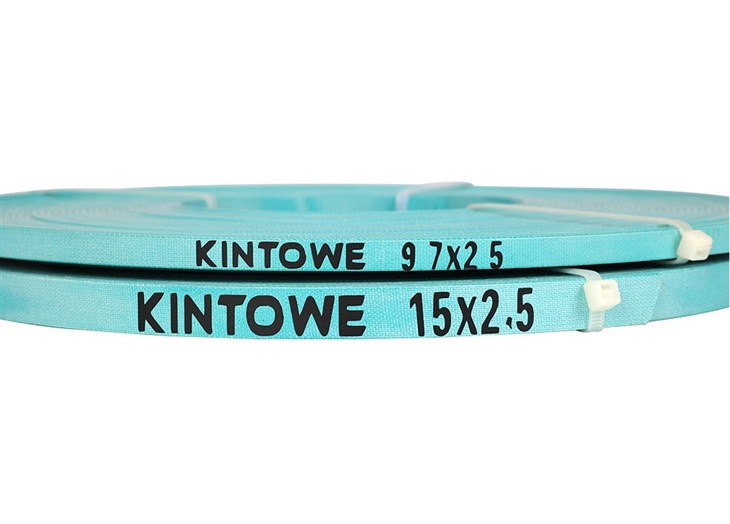

Design Features of PTFE Bearing Strips for Shock and Vibration Management
In addition to the inherent properties of PTFE, the design of PTFE bearing strips also plays a crucial role in handling shock and vibration.
Reinforcement
Some PTFE bearing strips are reinforced with materials such as glass fibers, carbon fibers, or bronze particles. Reinforcement enhances the mechanical strength and stiffness of the bearing strips, making them more capable of withstanding high - impact forces. For instance, Bronze - filled PTFE Guide Bands have improved load - carrying capacity and wear resistance, which are essential for handling shock and vibration in heavy - duty applications. The bronze particles act as a reinforcement phase, increasing the hardness and toughness of the PTFE matrix, and helping to distribute the shock and vibration forces more effectively.
Surface Texture
The surface texture of PTFE bearing strips can be engineered to optimize their shock and vibration handling capabilities. A textured surface can increase the contact area between the bearing strip and the mating surface, which helps in distributing the forces more evenly. Additionally, certain surface patterns can act as reservoirs for lubricants, further reducing friction and improving the damping characteristics of the bearing strips.
Shape and Dimensions
The shape and dimensions of PTFE bearing strips are carefully designed to fit specific applications and to handle the expected shock and vibration levels. For example, in applications where high - frequency vibrations are present, the bearing strips may be designed with a thinner cross - section to increase their flexibility and damping ability. In contrast, for applications with high - magnitude shocks, thicker and more robust bearing strips may be used to provide greater load - carrying capacity.
Real - World Applications of PTFE Bearing Strips in Shock and Vibration - Prone Environments
PTFE bearing strips are widely used in various industries where shock and vibration are common challenges.
Automotive Industry
In the automotive industry, PTFE bearing strips are used in engine components, suspension systems, and transmission systems. In engine pistons, the bearing strips help in reducing the friction and wear caused by the high - speed reciprocating motion, while also handling the shock forces generated during combustion. In suspension systems, they can absorb the vibrations from the road surface, providing a smoother ride and reducing the stress on other components.
Aerospace Industry
The aerospace industry demands high - performance materials that can withstand extreme conditions, including shock and vibration. PTFE bearing strips are used in aircraft landing gear, control surfaces, and engine mounts. In landing gear, they help in absorbing the shock forces during takeoff and landing, while in control surfaces, they ensure smooth and precise movement even under the influence of vibrations caused by air turbulence.
Industrial Machinery
In industrial machinery such as pumps, compressors, and conveyors, PTFE bearing strips are used to handle the shock and vibration generated during operation. For example, in a pump, the bearing strips can reduce the frictional forces and absorb the shock caused by the fluid flow and the reciprocating motion of the pump components. This helps in improving the efficiency and reliability of the pump, reducing maintenance costs, and extending the service life of the equipment.
Comparing PTFE Bearing Strips with Other Materials
While PTFE bearing strips have many advantages in handling shock and vibration, it's also important to compare them with other materials commonly used in similar applications.
Polyester Resin Guide Strips
Polyester Resin Guide Strips are another option for guiding and supporting components in industrial systems. Compared to PTFE bearing strips, polyester resin guide strips generally have lower chemical resistance and thermal stability. However, they may have a lower cost and can be suitable for applications where the shock and vibration levels are relatively low and the environmental conditions are less harsh.
Other Traditional Bearing Materials
Traditional bearing materials such as bronze and steel have high load - carrying capacities but may have higher coefficients of friction and be more prone to corrosion. PTFE bearing strips, with their low friction and high chemical resistance, can offer a more cost - effective and reliable solution in many applications, especially those where reducing friction and wear is a priority.
Conclusion
PTFE bearing strips are an excellent choice for handling shock and vibration in a wide range of industrial applications. Their unique properties, combined with well - engineered design features, enable them to effectively manage the dynamic forces, reducing wear and tear, and improving the reliability and longevity of industrial systems. Whether in the automotive, aerospace, or industrial machinery sectors, PTFE bearing strips have proven their worth in ensuring the smooth operation of equipment under challenging conditions.
If you are in the market for high - quality PTFE bearing strips to handle shock and vibration in your applications, we invite you to contact us for a detailed discussion. Our team of experts can provide you with the right solutions tailored to your specific needs. You can also explore our product range, including Bronze - filled PTFE Guide Bands and PTFE Guide Strips on our website.
References
- "Handbook of PTFE Technology" by W. D. Groenewoud
- "Industrial Tribology" by B. Bhushan
- "Engineering Materials and Their Applications" by J. A. Schey