

PTFE bearing tapes are widely used in various industrial applications due to their excellent properties such as low friction, high chemical resistance, and good wear resistance. One of the important physical properties that engineers and designers need to consider when using PTFE bearing tapes is the coefficient of thermal expansion (CTE). In this blog post, we will explore what the coefficient of thermal expansion of PTFE bearing tapes is, why it matters, and how it affects the performance of these tapes in different applications. As a PTFE bearing tapes supplier, we have in - depth knowledge of these products and can provide valuable insights.
Understanding the Coefficient of Thermal Expansion
The coefficient of thermal expansion is a measure of how much a material expands or contracts when its temperature changes. It is defined as the fractional change in length or volume of a material per degree change in temperature. For linear expansion, the formula for the coefficient of linear thermal expansion (α) is:
α = (ΔL / L₀) / ΔT
where ΔL is the change in length, L₀ is the original length, and ΔT is the change in temperature. For volumetric expansion, a similar formula is used, but with volume changes instead of length changes.
PTFE (Polytetrafluoroethylene) is a polymer with a relatively high coefficient of thermal expansion compared to some metals. The coefficient of linear thermal expansion of pure PTFE typically ranges from about 100 - 200 x 10⁻⁶ /°C. However, the value can vary depending on factors such as the manufacturing process, the presence of fillers, and the orientation of the polymer chains.
Why the Coefficient of Thermal Expansion Matters
The coefficient of thermal expansion is crucial in applications where PTFE bearing tapes are used because temperature changes can cause dimensional changes in the tapes. In precision engineering applications, even small dimensional changes can lead to problems. For example, in a high - precision mechanical system, if the PTFE bearing tape expands or contracts too much due to temperature variations, it can cause misalignment, increased friction, or even mechanical failure.
In applications where PTFE bearing tapes are used in combination with other materials, differences in the coefficients of thermal expansion can also be a concern. If the PTFE tape and the mating material have significantly different CTEs, thermal cycling can lead to stress at the interface between the two materials. This stress can cause delamination, cracking, or reduced performance over time.
Factors Affecting the Coefficient of Thermal Expansion of PTFE Bearing Tapes
Fillers
One of the most effective ways to modify the coefficient of thermal expansion of PTFE bearing tapes is by adding fillers. Fillers can be used to reduce the CTE of PTFE, making it more compatible with other materials in a given application. For example, adding bronze powder as a filler can significantly lower the CTE of PTFE. Our 40% Bronze Filled PTFE Guide Bands have a lower coefficient of thermal expansion compared to pure PTFE tapes, which makes them more suitable for applications where dimensional stability is critical.
Manufacturing Process
The manufacturing process of PTFE bearing tapes can also affect their coefficient of thermal expansion. Processes such as extrusion and compression molding can result in different orientations of the polymer chains, which in turn can influence the CTE. For example, a well - oriented PTFE tape may have a more anisotropic CTE, meaning that the expansion rate may be different in different directions.
Temperature Range
The coefficient of thermal expansion of PTFE is not constant over all temperature ranges. At low temperatures, the CTE of PTFE is relatively low, but it increases as the temperature rises. This non - linear behavior needs to be considered when designing applications that operate over a wide temperature range.
Applications and the Impact of CTE
Let's look at some common applications of PTFE bearing tapes and how the coefficient of thermal expansion affects their performance.
Hydraulic Seals
In hydraulic systems, PTFE bearing tapes are often used as guide elements. These tapes need to maintain a precise fit within the hydraulic cylinder to ensure smooth operation. Temperature changes in a hydraulic system can be significant, especially during high - pressure operations. If the PTFE bearing tape has a high CTE, it may expand or contract too much, leading to leakage or increased friction. Our PTFE Bearing Strips are designed to have a suitable CTE for hydraulic applications, ensuring reliable performance even under varying temperature conditions.
Precision Machinery
In precision machinery, such as machine tools or measuring instruments, PTFE bearing tapes are used to reduce friction and provide smooth motion. Dimensional stability is of utmost importance in these applications. A high CTE can cause the bearing tape to expand or contract, leading to inaccurate positioning or reduced precision. By carefully selecting PTFE bearing tapes with appropriate CTE values, we can help our customers achieve the desired level of precision in their machinery.
Chemical Processing
In chemical processing plants, PTFE bearing tapes are used due to their excellent chemical resistance. However, chemical processes often involve temperature variations. The CTE of the PTFE tape needs to be considered to ensure that the tape maintains its integrity and performance in the presence of chemicals and temperature changes. Our PTFE bearing tapes are tested to perform well in a wide range of chemical and thermal environments.
Comparison with Other Materials
When comparing PTFE bearing tapes with other materials used in similar applications, the coefficient of thermal expansion is an important factor. For example, metals such as steel have much lower coefficients of thermal expansion compared to PTFE. This difference needs to be taken into account when designing assemblies that combine PTFE and metal components.
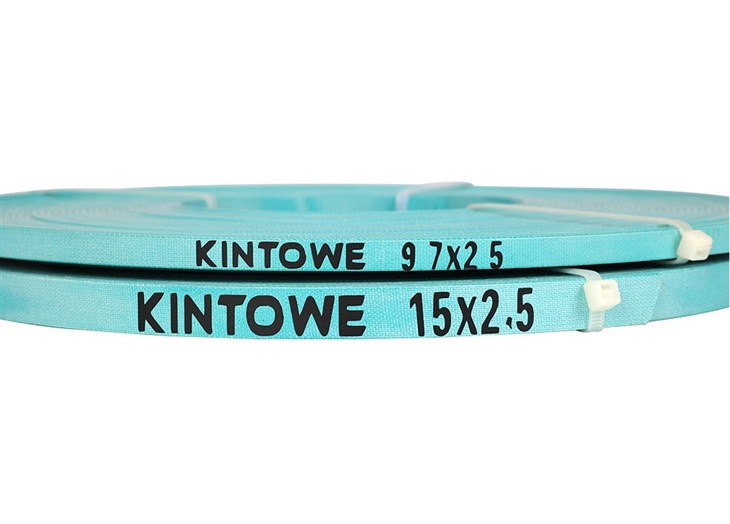
Polyester resin guide strips, like our Polyester Resin Guide Strips, also have different coefficients of thermal expansion compared to PTFE. Depending on the specific application requirements, either PTFE or polyester resin guide strips may be more suitable based on their CTE values and other properties.

Measuring the Coefficient of Thermal Expansion
Measuring the coefficient of thermal expansion of PTFE bearing tapes requires specialized equipment. One common method is to use a dilatometer, which measures the dimensional changes of a sample as a function of temperature. By carefully controlling the temperature and measuring the corresponding length or volume changes, the CTE can be accurately determined.
Controlling the Coefficient of Thermal Expansion in Our Products
As a PTFE bearing tapes supplier, we take several steps to control the coefficient of thermal expansion in our products. We carefully select the raw materials and fillers to achieve the desired CTE values. Our manufacturing processes are optimized to ensure consistent and reliable properties in our PTFE bearing tapes. We also conduct extensive testing to verify the CTE and other properties of our products before they are shipped to our customers.
Conclusion
The coefficient of thermal expansion of PTFE bearing tapes is an important property that can significantly affect their performance in various applications. By understanding the factors that influence the CTE, such as fillers, manufacturing processes, and temperature range, we can provide our customers with PTFE bearing tapes that meet their specific requirements. Whether you are in the hydraulic, precision machinery, or chemical processing industry, choosing the right PTFE bearing tape with an appropriate CTE is crucial for the success of your application.
If you are interested in learning more about our PTFE bearing tapes or need help in selecting the right product for your application, please feel free to contact us. We are here to assist you with all your PTFE bearing tape needs.
References
- "Handbook of Plastics, Elastomers, and Composites" by Charles A. Harper.
- "Polymer Science and Technology" by Donald R. Paul and Charles B. Bucknall.
- Technical literature from PTFE manufacturers.