

Hey there! As a supplier of semi - finished products, I know firsthand the importance of improving the efficiency of processing these items. It not only helps us meet our customers' demands faster but also boosts our bottom line. In this blog, I'll share some tips and tricks on how to make the processing of semi - finished products more efficient.
1. Streamline Your Production Process
The first step in improving efficiency is to take a close look at your production process. You need to identify any bottlenecks or inefficiencies that might be slowing things down. For example, are there steps in the process that can be combined or eliminated? Maybe some tasks are being repeated unnecessarily.
One way to do this is by using a process mapping tool. Draw out every step of your semi - finished product processing, from the moment raw materials arrive to the point when the semi - finished product is ready for further use. This visual representation can help you spot areas where improvements can be made.
Another aspect is to standardize your processes. Having clear, written procedures for each step ensures that everyone on the team knows what they're supposed to do. This reduces the chances of errors and rework, which can eat up a lot of time. For instance, if you're producing Carbon Fiber Filled PTFE Tubes, having a set way to mix the materials, mold the tubes, and perform quality checks can make the whole process much smoother.

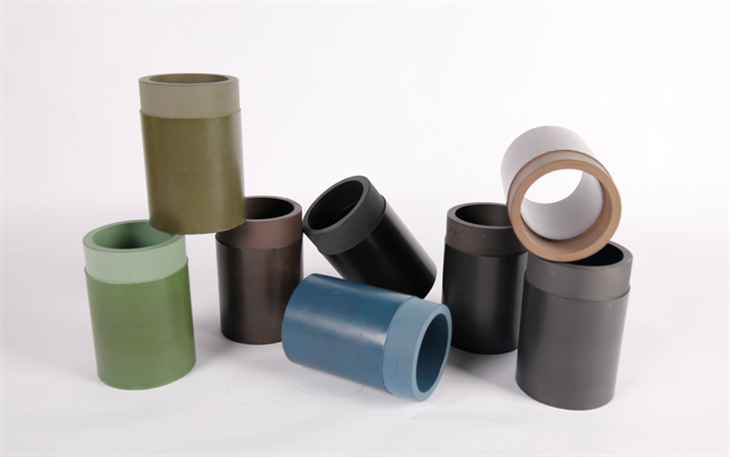
2. Invest in the Right Equipment
Using outdated or inappropriate equipment can really slow down your processing. It's worth investing in modern, high - quality machinery that is designed for the specific tasks involved in making your semi - finished products.
For example, if you're dealing with Marine Composite Tubes, having advanced cutting and shaping tools can significantly reduce the time it takes to create these tubes. Newer equipment often comes with features like automated controls, which can increase precision and speed up production.
However, it's not just about buying the most expensive equipment. You need to do your research and choose the tools that are the best fit for your production volume and the complexity of your semi - finished products. Also, make sure to maintain your equipment regularly. A well - maintained machine is less likely to break down, which means fewer production delays.
3. Train Your Staff
Your employees are a crucial part of the processing efficiency equation. Providing them with proper training is essential. They need to understand how to operate the equipment safely and efficiently, as well as the best practices for each step of the production process.
Regular training sessions can keep your staff up - to - date with the latest techniques and technologies. You can also encourage them to share their ideas for improving efficiency. After all, they're the ones on the front lines, and they might have some great insights based on their daily experiences.
For instance, if you're producing Polyurethane Casting Billets, training your staff on the correct mixing ratios, casting techniques, and curing times can lead to better - quality products and faster production.
4. Optimize Your Inventory Management
Managing your inventory effectively can have a big impact on processing efficiency. You don't want to run out of raw materials in the middle of a production run, but you also don't want to have too much inventory sitting around, tying up your capital.
Implement an inventory management system that allows you to track your raw materials and semi - finished products in real - time. This way, you can order new supplies just in time to keep your production going smoothly. You can also use data from past production runs to forecast your future inventory needs more accurately.
Another aspect of inventory management is to organize your storage space. Having a well - organized warehouse makes it easier to find the materials you need quickly. Label everything clearly and use a logical storage layout. This reduces the time spent searching for items, which can add up over time.
5. Improve Communication
Good communication is key in any production environment. Make sure there is clear communication between different departments involved in the processing of semi - finished products. For example, the production team should be able to easily communicate with the purchasing department if they're running low on raw materials.
You can use tools like project management software or instant messaging platforms to facilitate communication. Regular team meetings can also be a great way to keep everyone on the same page. During these meetings, you can discuss any issues or challenges that are affecting processing efficiency and come up with solutions together.
6. Implement Quality Control Measures
Quality control is not just about ensuring that your semi - finished products meet the required standards. It also plays a role in improving efficiency. By catching and fixing quality issues early in the production process, you can avoid having to rework or scrap products later on.
Set up a quality control system that includes regular inspections at different stages of the processing. For example, when producing Carbon Fiber Filled PTFE Tubes, you can inspect the raw materials before they're used, check the tubes during the molding process, and perform a final inspection before they're shipped out.
Use quality control data to identify trends and areas for improvement. If you notice that a particular type of defect is occurring frequently, you can take steps to address the root cause, which can ultimately lead to a more efficient production process.
7. Continuously Monitor and Improve
Efficiency improvement is an ongoing process. You need to continuously monitor your production process and look for ways to make it better. Set up key performance indicators (KPIs) to measure your progress. For example, you can track the number of products produced per hour, the percentage of defective products, or the time it takes to complete a production run.
Regularly review your KPIs and analyze the data. If you see that a particular area is not meeting your targets, dig deeper to find out why. Maybe it's a problem with the equipment, the staff training, or the production process itself. Once you identify the issue, come up with a plan to address it and implement the changes.
In conclusion, improving the efficiency of processing semi - finished products is a multi - faceted challenge. By streamlining your production process, investing in the right equipment, training your staff, optimizing your inventory management, improving communication, implementing quality control measures, and continuously monitoring and improving, you can significantly increase the efficiency of your operations.
If you're interested in our semi - finished products or have any questions about our processing capabilities, we'd love to hear from you. Feel free to reach out to us for a procurement discussion. We're always looking for new partners and opportunities to grow together.
References
- Lean Manufacturing Principles: A Guide to Streamlining Production, [Publisher Name], [Year]
- Inventory Management Best Practices, [Author Name], [Year]
- Quality Control in Manufacturing, [Research Institute], [Year]