

Hey there! As a supplier of bearings and washers, I often get asked about how to measure the clearance of these crucial components. Measuring the clearance accurately is super important as it can greatly affect the performance and lifespan of your machinery. In this blog, I'm gonna walk you through the ins and outs of measuring the clearance of bearings and washers.
Why Measuring Clearance Matters
Before we dive into the how - to part, let's quickly talk about why measuring clearance is such a big deal. The clearance in bearings and washers refers to the amount of free movement between the inner and outer races of a bearing or the space between a washer and its mating surface. If the clearance is too small, it can lead to overheating, excessive wear, and even seizure of the bearing. On the other hand, if the clearance is too large, it can cause vibrations, noise, and reduced accuracy in your machinery. So, getting the clearance just right is key to ensuring smooth operation and long - term reliability.
Types of Clearance
There are mainly two types of clearance we need to consider: radial clearance and axial clearance.
Radial Clearance: This is the amount of play in the radial direction, that is, the space between the inner and outer races of a bearing measured perpendicular to the shaft axis. Radial clearance is crucial for bearings that support radial loads, like those in motors, pumps, and conveyor systems.
Axial Clearance: Axial clearance is the play in the axial direction, parallel to the shaft axis. It's important for bearings that are subjected to axial loads, such as thrust bearings in automotive transmissions or machine tool spindles.
Measuring Radial Clearance
Now, let's get into the methods of measuring radial clearance.
1. Dial Indicator Method
The dial indicator method is one of the most common and accurate ways to measure radial clearance. Here's how you do it:
- First, mount the bearing on a clean and straight shaft. Make sure the shaft is free from any dirt or burrs that could affect the measurement.
- Then, position the dial indicator so that its plunger is in contact with the outer race of the bearing. The plunger should be perpendicular to the outer race surface.
- Next, use a pry bar or a similar tool to move the outer race of the bearing radially in one direction until it reaches its maximum position. Take note of the reading on the dial indicator.
- Now, move the outer race in the opposite direction until it reaches its maximum position again and record the new reading.
- The difference between these two readings is the radial clearance of the bearing.
2. Feeler Gauge Method
The feeler gauge method is a simpler but less accurate way to measure radial clearance.
- Remove the bearing from the shaft.
- Insert a feeler gauge between the inner and outer races of the bearing at several points around the circumference.
- Find the thickest feeler gauge that can be inserted without excessive force. The thickness of this feeler gauge is an approximation of the radial clearance.
Measuring Axial Clearance
Measuring axial clearance also has a few reliable methods.
1. Dial Indicator Method
Similar to measuring radial clearance, the dial indicator can be used to measure axial clearance.
- Mount the bearing on the shaft.
- Position the dial indicator so that its plunger is in contact with the end face of the outer race of the bearing.
- Use a suitable tool to apply an axial force to the outer race of the bearing in one direction until it reaches its maximum position and record the reading on the dial indicator.
- Then, apply an axial force in the opposite direction and record the new reading.
- The difference between these two readings is the axial clearance of the bearing.
2. Axial Movement Measurement
You can also measure axial clearance by measuring the axial movement of the shaft.

- Fix the inner race of the bearing to the shaft and the outer race to the housing.
- Use a measuring device, like a micrometer, to measure the axial movement of the shaft when an axial force is applied. This measured movement is equivalent to the axial clearance of the bearing.
Measuring Clearance of Washers
Washers play an important role in ensuring proper alignment and load distribution in a bearing system. Measuring the clearance of washers is also essential.
1. Thickness Measurement
The most straightforward way to measure the clearance related to washers is to measure their thickness.
- Use a micrometer or a caliper to measure the thickness of the washer at several points.
- Compare the measured thickness with the specified thickness. Any deviation can indicate a problem with the clearance.
2. Fit and Play Measurement
When a washer is installed between two surfaces, you can check the fit and play.
- Try to move the washer slightly in the axial and radial directions. If there is excessive movement, it may indicate that the clearance is too large. If it's difficult to move the washer at all, the clearance may be too small.
Our Range of Bearings and Washers
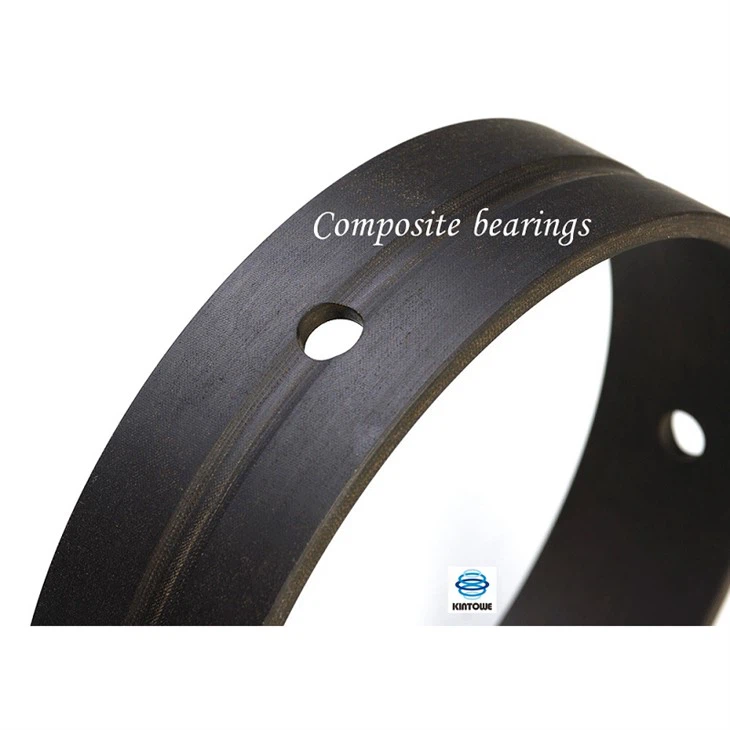
At our company, we offer a wide range of high - quality bearings and washers to meet your diverse needs. We have Composite Bearings that are known for their excellent wear resistance and self - lubricating properties. These bearings are great for applications where maintenance is difficult or where traditional lubricants are not suitable.
Our Water Lubricated Stern Tube Bearings are specifically designed for marine applications. They can operate smoothly in water - lubricated environments, reducing the need for oil - based lubricants and minimizing environmental impact.
If you're looking for bearings that can handle misalignment and angular movement, our Composite Spherical Bearings are a perfect choice. They offer high load - carrying capacity and long service life.
Conclusion
Measuring the clearance of bearings and washers is a critical step in ensuring the proper functioning of your machinery. By using the methods we've discussed, you can accurately measure the clearance and make sure that your bearings and washers are installed correctly.
If you're in the market for high - quality bearings and washers or have any questions about measuring clearance, don't hesitate to reach out to us. We're here to help you find the right products for your applications and provide you with all the technical support you need. Let's work together to keep your machinery running smoothly!
References
- "Bearing Handbook" by SKF
- "Mechanical Design and Manufacturing" textbooks